
Baby/Toddler Developmental Checks
From head shape and neck tightness in early infancy, to early movement patterns and milestones, our physiotherapists offer gentle, evidence-based assessment and support for babies and toddlers at every stage.
Plagiocephaly and Torticollis
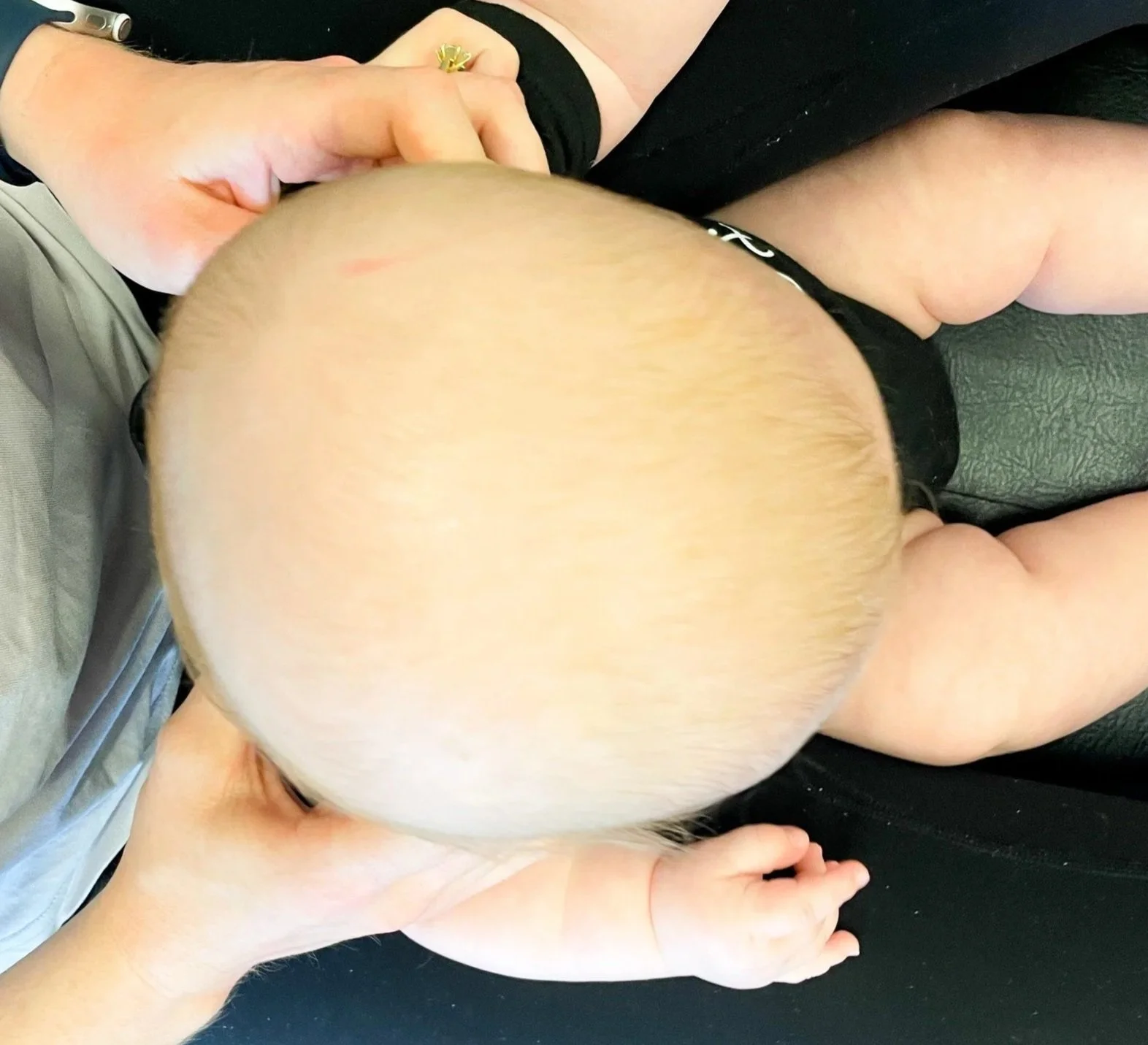
Positional Plagiocephaly is a deformity of the skull that results in an asymmetrical head shape or a ‘flat spot’ on a baby’s head.
Congenital Muscular Torticollis is a condition where tight neck muscles cause a baby’s head to tilt and rotate to the side.
These two conditions often occur together, which is why early assessment and support are important.
What to expect
At Mighty Kids Therapy, we use a gentle, conservative physiotherapy approach tailored to your baby’s individual needs. Our goal is to support healthy head shape and comfortable neck movement in a way that fits easily into everyday routines.
Assessment may include:
Review of their birth history and daily positioning
Photos and measurements of their head and neck
Physical and neurological examination
Treatment may include:
Advice on 24-hour positioning
Gentle stretches to reduce neck tightness
Exercises to encourage strength, movement, and symmetry
When should I book an appointment?
Early intervention makes a big difference. Ideally, treatment starts before 2 months of age. As babies grow and begin rolling (around 4 months), it can become harder to change head shape without extra support. In some cases, if physiotherapy alone isn’t enough, we may recommend helmet therapy in collaboration with a qualified orthotist. This involves a custom-made helmet worn most of the day to help gently guide head shape as your baby grows.
If you’ve noticed a flat spot, head tilt, or a strong preference for turning one way, we encourage you to get in touch and book an appointment. Acting early gives your baby the best chance for improvement—and we’re here to support you every step of the way.
Developmental Checks
As babies and toddlers grow, parents often notice things like in-toeing, out-toeing, bow legs, or a delay in reaching movement milestones. These can range from normal variations that improve with time to conditions that benefit from early treatment—so a physiotherapy assessment is the best way to know which applies to your child.
We commonly assess:
Babies/toddlers with delays in reaching milestones (e.g. sitting, crawling, standing, walking)
Babies/toddlers with asymmetrical or atypical movement patterns (e.g. favouring one side)
Toddlers with in-toeing and out-toeing concerns (feet turning in or out when walking)
Toddlers with bow legs or knock knees
When should I book an appointment?
We recommend booking an assessment if:
You've noticed an asymmetry (one side different to the other) or atypical movements
Milestones haven't been reached within the typical timeframe
Your baby/toddler isn’t keeping up with their peers
You're simply unsure and would like some reassurance