Where to Purchase Supportive Shoes
Note: shoes must fit correctly! Children grow quickly, and while it can be tempting to buy shoes that are slightly larger so your child can “grow into them”, poorly fitted shoes may not provide adequate support and can increase the risk of trips and falls, lower limb pain, and muscle imbalances. It is better to purchase a cheaper shoe that fits well and meets the shoe quality checklist (see next section below), than purchase an expensive orthopaedic shoe that is too big.
Orthopaedic shoe suppliers
Note: you may be able to find second hand options on Facebook Marketplace.
Cheaper alternatives
Athlete’s Foot
Foot Locker
Shoe Quality Checklist
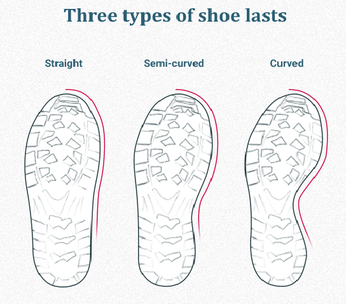
Straight last
Straight line from midpoint of heel to midpoint of toes. Minimises in-toeing (pigeon toeing) and helps alignment.
Solid heel cap
Firm back of shoe that is deep (comes up high enough at Achilles Tendon).
Provides a stable base for the foot.
Test by squeezing sides of heel midway up the heel box. The sides should hold their shape and not collapse.
Arch support
Typically developing children with no foot/leg pain = no arch support
Children with low muscle tone = small arch support
Arch control
Typically developing children with no foot/leg pain = flexible sole, especially around middle/front section
Children with low muscle tone = start with more rigid sole and progress to more typical sole as control improves
Children with high muscle tone = rigid sole
Toe flex
Shoe easily bends at toes.
Assists with toe off (where child’s foot bends to push off for walking and running).
Shoe weight
Make sure shoe is not too heavy. Heavy shoes are hard to lift and exaggerates foot anomalies associated with muscle weakness.
Shoe height
Typically developing children without foot/leg pain = standard shoe height
Children with low muscle tone = high support above the ankles
Children with high muscle tone = strict high support above the ankles
Shoe design
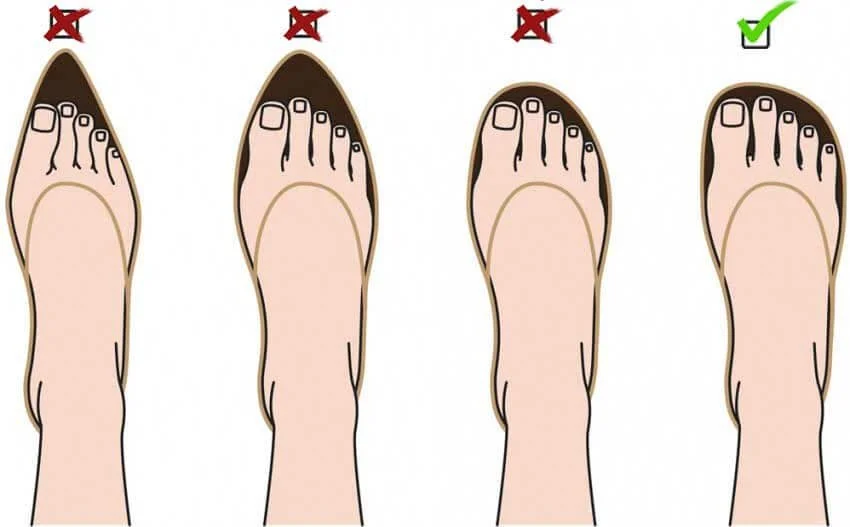
No toe crowding – shoe should be skinnier at heel and wider at toes; in the shape of a foot
Laces or Velcro are better than slip on shoes